











Helping Your Child Find the Right Path to Confidence and Fitness
As a parent in Plantation, choosing the right after school activity can feel like a high-stakes decision. You want your child to be active, healthy, and social, but the world of youth athletics has changed. Modern youth sports are often hyper-competitive, seasonal, and focused heavily on natural talent. For many children, this environment leads to more stress than growth.
At John Wai Martial Arts, we have spent nearly three decades watching children walk through our doors in Plantation, Florida. Many of them tried soccer, baseball, or football first. Some enjoyed it, but many felt left behind or lost in the crowd. Martial arts offers a distinct alternative—a professional training environment where the focus is on the individual’s journey within a supportive community.
Key Differences at a Glance
- No Bench Time: In martial arts, every student is an active participant in every class. There are no “starters” and “subs.”
- Year-Round Stability: Unlike seasonal sports, martial arts training is consistent throughout the year, providing a stable routine for kids.
- Individual Progress: Students advance at their own pace based on their own effort, removing the fear of “letting the team down.”
- Real-World Skills: Beyond physical fitness, children learn effective self-defense and martial arts techniques that carry over into real-life safety.
The Emotional Impact of the Bench vs. the Mat
In traditional team sports, the primary goal is often winning the game. This naturally leads to a hierarchy where the most physically gifted children get the most “playing time,” while others sit on the bench. For a child trying to build self-esteem, sitting on the sidelines can be devastating. It sends a silent message that they aren’t “good enough” to contribute.
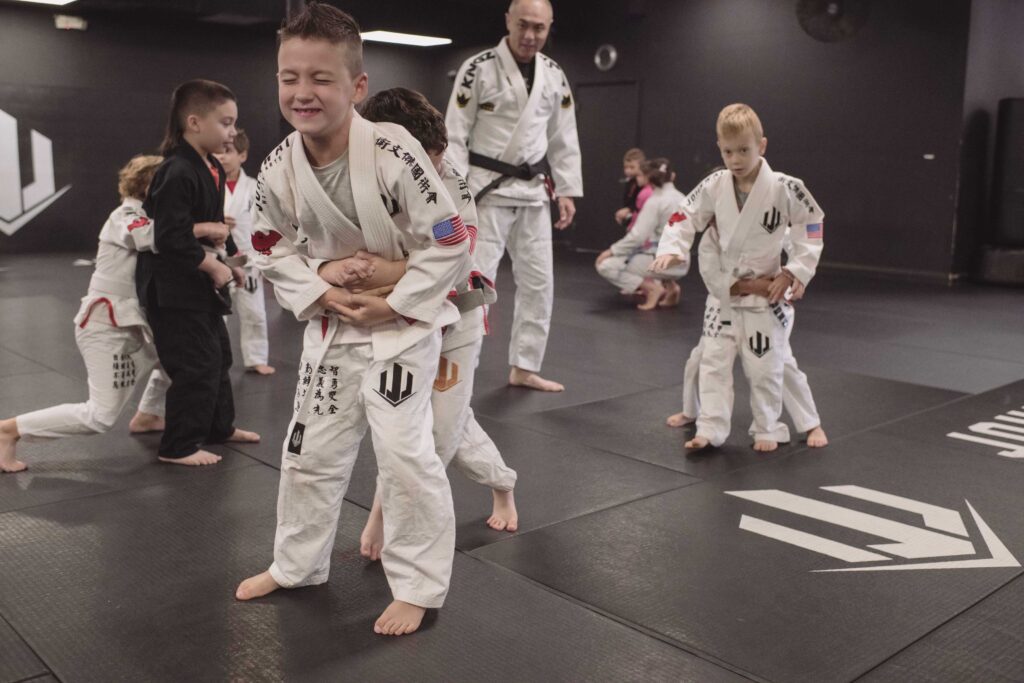
One of the core benefits of martial arts for kids is the elimination of the bench. In our structured classes, every child is on the mat. Whether we are practicing Muay Thai, Brazilian Jiu Jitsu, or Kung Fu, every student is engaged in the drills, the sweat, and the learning process. This constant engagement ensures that no child feels invisible.
By removing the “star player” dynamic, we foster a no-ego environment. Our students understand that the only person they are competing against is the person they were yesterday. This shift in perspective is often the primary reason why children who don’t “click” with team sports thrive in our facility.
Building Confidence Through Personal Achievement
Building confidence in kids isn’t about giving out participation trophies; it’s about helping them overcome challenges through their own hard work. In a team setting, a win can sometimes feel disconnected from a child’s individual effort. Conversely, a loss can feel like a personal failure if they made a mistake on the field.
In martial arts, progress is measurable and personal. When a student earns a new belt or masters a difficult technique in our kids martial arts program, they know exactly why they succeeded. They put in the “real training,” they showed discipline, and they listened to high-level coaching.
This creates a sense of agency. When a child realizes that their effort directly correlates to their success, their confidence soars. They stop looking for external validation and start trusting their own capabilities. This is a foundational skill that helps them excel in school, navigate social pressures, and stand up to bullying.
Non-Traditional Sports for Children: A Year-Round Solution
Many parents struggle with the “seasonal shuffle.” Soccer ends in the fall, baseball starts in the spring, and in between, there is often a gap where children lose their routine and physical momentum. Transitioning between different sports every few months can also make it difficult for children to build deep, lasting relationships with coaches and peers.
Martial arts is a lifestyle, not a season. We offer after school activities for kids in Plantation that run twelve months a year. This consistency is vital for developmental growth. It allows coaches to truly get to know each student’s temperament and learning style. Over years of training, our coaches become mentors who help guide children through the ups and downs of growing up.
Furthermore, because our training is year-round, the physical benefits—strength, flexibility, and cardiovascular health—are maintained rather than lost during an “off-season.”
The Practical Side: Real Combat Skills and Self-Defense
While team sports are excellent for fitness, martial arts adds a layer of practical utility: effective self-defense. We believe in teaching realistic combat skills. While we maintain a positive and safe environment, the techniques our students learn in Brazilian Jiu Jitsu or Kickboxing are rooted in real-world application.
In today’s world, knowing how to handle a physical confrontation or a bully provides a child with a profound sense of security. This isn’t about teaching kids to fight; it’s about giving them the “realistic combat skills” and the “better focus” needed to avoid conflict entirely, while having the tools to protect themselves if necessary. This type of empowerment is rarely found on a soccer pitch or a basketball court.
Why John Wai Martial Arts is Different
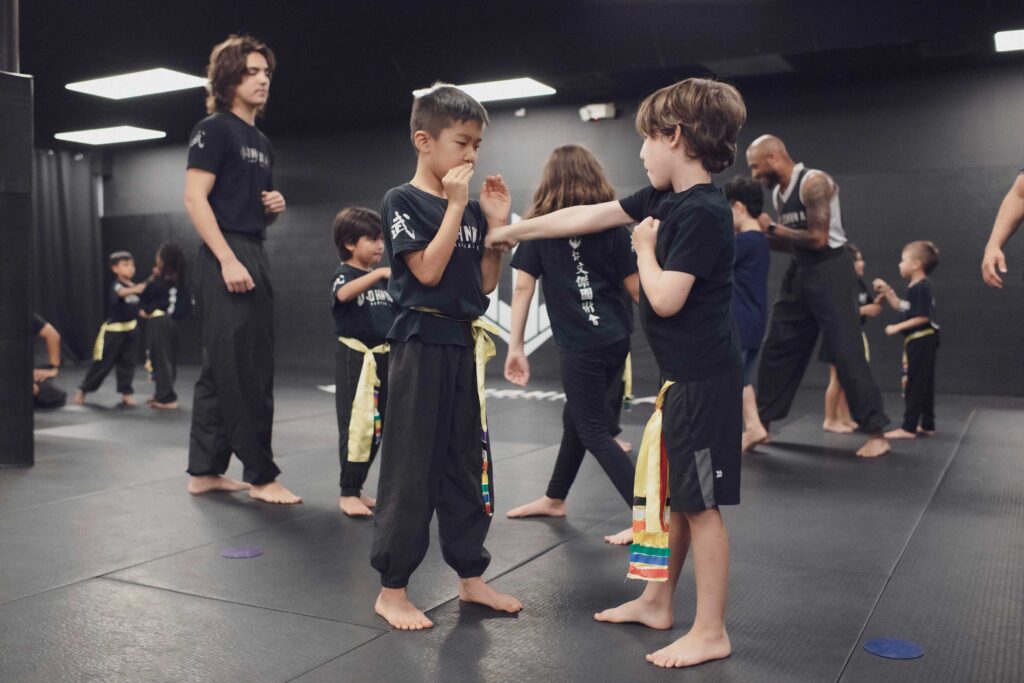
Since 1997, John Wai Martial Arts has stood as a premier destination in Plantation for families who take training seriously. We don’t offer “fluff” or generic programs. Our facility is a professional environment where ego is left at the door and high-level coaching is the standard.
We provide a unique structure that includes:
- Professional Coaching: Our instructors are experts in their disciplines, providing a level of training that goes far beyond basic childcare.
- Flexible Schedules: We understand busy families. With multiple classes and morning/evening options, we make it easy to stay consistent.
- A Like-Minded Community: Your child will be surrounded by other kids who are there to work hard, show respect, and improve themselves.
The Social Aspect: Teamwork Without the Pressure
It is a common misconception that martial arts is a “lonely” sport. While the progress is individual, the training is highly social. Students must work with partners to drill techniques, practice controlled sparring, and encourage one another during tough conditioning segments. They learn to respect their training partners—trusting them with their safety and vice versa. This creates a bond that is often deeper than what is found in traditional team sports because it is built on mutual respect and shared effort in a “real training” environment.
FAQs About Martial Arts vs. Team Sports
Is martial arts safer than team sports like football or soccer?
Studies often show that supervised martial arts training has a lower rate of injury than many high-impact team sports. Because our classes are highly structured and led by professional coaches, we prioritize safety and proper technique above all else. We use high-quality mats and protective gear to ensure a safe learning environment.
What if my child isn’t “athletic”?
This is exactly where martial arts shines. Traditional sports often require a baseline level of speed or coordination just to participate. In martial arts, we meet the student where they are. We have seen many children who were considered “uncoordinated” develop incredible balance and agility through consistent practice on the mat.
Will martial arts make my child aggressive?
Actually, the opposite is true. Martial arts teaches emotional regulation and discipline. By providing a healthy outlet for energy and teaching the gravity of physical force, students typically become more calm and less likely to use violence outside the gym. Our “no ego” policy reinforces that martial arts is for self-improvement, not for showing off.
How often should my child attend classes?
For most children, attending 2 to 3 classes per week is the “sweet spot” for seeing consistent progress in their skills and confidence. Because we offer unlimited training for one rate, families have the flexibility to adjust their schedule as needed.
At what age can a child start training?
In our Plantation facility, we offer programs for children as young as 3 or 4 years old. These early programs focus on fundamental movement, listening skills, and basic coordination, setting a strong foundation for future training in more complex disciplines.
Is it too late to start if my child is a teenager?
It is never too late. We have specific programs for teenagers that address their unique needs, focusing on stress release, fitness, and high-level self-defense. Our teen students often find the martial arts community to be a welcome break from the social pressures of high school.
See the Difference for Yourself
Choosing between martial arts and team sports doesn’t have to be an “either/or” decision, but for many families, martial arts provides the structured, ego-free growth that traditional sports lack. If you want your child to build real confidence, learn effective self-defense, and train in a professional environment, we invite you to visit us.
Experience our high-level coaching and positive environment first-hand. We are offering a Free Trial Week for all new students. Come see why John Wai Martial Arts has been the trusted choice for families in Plantation for nearly 30 years.
Contact us today at (954) 382-2228 or visit our facility in Plantation to get started. Let’s help your child grow stronger, mentally and physically.